
Air Bubble Film for Protective Packaging: A Complete Guide for Businesses
Air bubble film for protective packaging is widely used to cushion fragile products, reduce surface scratches, and help protect goods during storage, handling, and transportation. For manufacturers, distributors, e-commerce businesses, and international exporters, choosing the right bubble film can improve packaging efficiency and help reduce the risk of shipping damage.
However, not every product requires the same type of protective packaging material. Product weight, shape, fragility, shipping distance, and carton design all affect the choice of packaging.
In this guide, we explain what air bubble film is, how it works, where it is used, and how businesses can select suitable air bubble film for fragile product packaging. We also answer common questions about bubble wrap, shipping protection, customization, and bulk purchasing.
What Is Air Bubble Film for Protective Packaging?
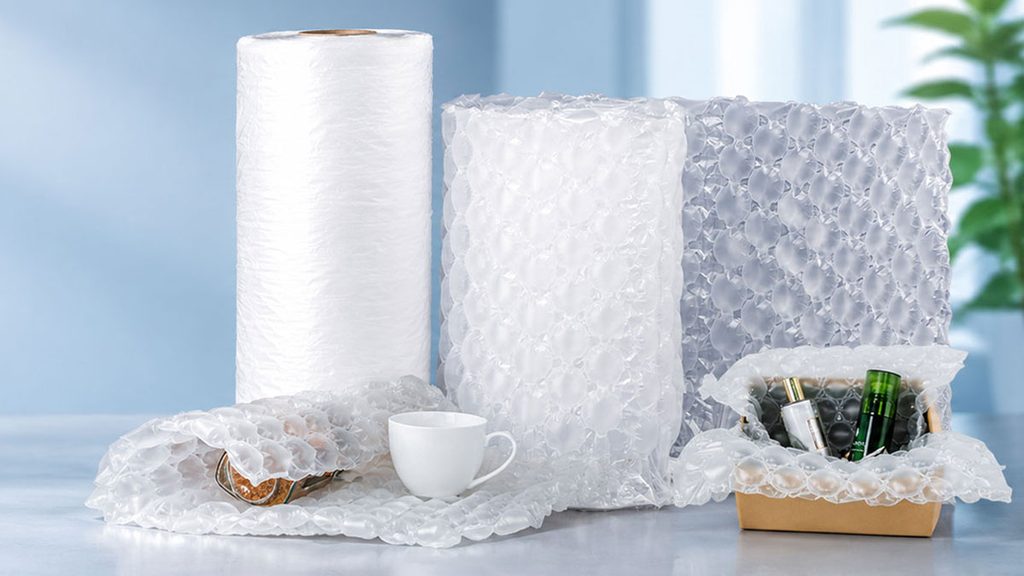
Air bubble film, commonly known as bubble wrap, is a flexible plastic packaging material containing regularly spaced air pockets. These pockets provide cushioning when the film is wrapped around a product or placed between items and the outer carton.
As a type of protective bubble film for shipping, it helps reduce direct contact, surface abrasion, and some impact forces during handling and transportation.
Air bubble film is commonly available in rolls, sheets, and converted packaging formats. Depending on the application, businesses can choose different bubble sizes, film thicknesses, roll widths, and material structures.
For companies sourcing air bubble film rolls for packing, the most important consideration is whether the material matches the product’s protection requirements and packing process.
How Does Bubble Film Protect Products?
Air bubble film protects products through several mechanisms:
- Cushioning: Air pockets compress under pressure and help absorb some impact energy.
- Surface protection: The film creates a layer between the product and other surfaces, helping reduce scratches and scuffs.
- Separation: Individual items can be wrapped separately to reduce direct contact during shipping.
- Lightweight packaging: Bubble film adds relatively little weight compared with many rigid protective materials.
- Flexible wrapping: The film can be cut and wrapped around products of different shapes and sizes.
Bubble film is not a complete replacement for a suitable shipping carton, corner protectors, or internal void fill. For fragile or heavy products, it should be selected as part of a complete protective packaging system.
Main Benefits of Air Bubble Film for Packaging
1. Helps Protect Fragile Products During Shipping
Glassware, ceramic products, decorative items, and other breakable goods can be damaged by impacts and movement during transportation.
Using air bubble film for fragile product packaging helps cushion the product and reduce direct contact with the carton or neighboring items. For particularly fragile goods, individual wrapping and additional protective materials may be necessary.
2. Helps Reduce Scratches and Surface Damage
Products with polished, painted, or delicate surfaces may require protection even when they are not easily broken.
Bubble film can be used to wrap furniture components, metal parts, household accessories, and decorative products. For sensitive electronic surfaces or products that may be affected by static electricity, an appropriate anti-static packaging material may be required instead of standard bubble film.
3. Lightweight and Easy to Handle
Compared with some rigid protective materials, air bubble film is lightweight and flexible. It can be cut to the required length and used in different packing operations.
For businesses shipping a large number of orders, selecting a suitable air bubble film roll for packing can help simplify routine wrapping tasks.
4. Suitable for Different Packaging Applications
Air bubble film can be used in e-commerce fulfillment, warehouse packing, industrial component protection, furniture packaging, and international shipping.
Businesses can select suitable specifications according to their products, packaging equipment, storage conditions, and order volumes.
5. Supports Customized Packaging Requirements
Different products require different levels of protection. Buyers may need specific roll widths, bubble sizes, film thicknesses, sheet dimensions, or packaging formats.
When sourcing custom air bubble film for industrial packaging, businesses should communicate their product dimensions, weight, surface requirements, and intended shipping conditions before confirming specifications.
Common Applications of Protective Bubble Film
Air bubble film is used across a wide range of industries. The following examples illustrate common applications rather than guaranteed protection for every product.
Electronics and Electronic Accessories
Bubble film can provide surface cushioning for suitable electronic accessories, cables, housings, and non-sensitive components.
For products vulnerable to electrostatic discharge, buyers should consider anti-static packaging and evaluate whether additional shielding or specialized packaging is required.
Glassware and Ceramic Products
Glass bottles, cups, ceramic decorations, and similar items can be individually wrapped with bubble film before being placed in a suitable carton.
For fragile shipments, use adequate separation between items, secure the products against movement, and consider double boxing when appropriate.
Household Products and Furniture Components
Decorative accessories, furniture fittings, plastic components, and selected household products can benefit from bubble film that helps prevent scratches and minor surface damage.
The appropriate film size and thickness depend on the product’s shape, weight, and surface sensitivity.
E-commerce and Retail Packaging
Online retailers often need flexible packaging materials that can be used across different product sizes.
Protective bubble film can be incorporated into an e-commerce packing process for wrapping individual products, separating items, or adding cushioning inside shipping boxes.
Industrial Parts and Export Packaging
For distributors, exporters, and industrial packaging buyers, bubble film can help protect components during warehouse handling and transportation.
When evaluating air bubble packaging material for wholesale, businesses should consider not only the purchase price but also packaging speed, material consumption, storage space, and the cost of potential product damage.
How to Choose the Right Air Bubble Film for Protective Packaging
Selecting suitable bubble film requires more than choosing the lowest-priced roll. Consider the following factors before placing a bulk order.
1. Product Weight and Fragility
Lightweight products with delicate surfaces may require a different film structure from heavy or easily broken products.
Assess the product’s weight, fragility, sharp edges, and susceptibility to scratches. For heavy products, bubble film alone may not provide sufficient support.
2. Bubble Size
Different bubble sizes suit different packaging requirements.
- Small bubbles: Often suitable for lightweight products and surface protection.
- Larger bubbles: May provide more cushioning space for selected products that need additional impact protection.
The best choice depends on the complete material structure and product requirements, not bubble size alone.
3. Film Thickness and Material Structure
Film thickness affects handling, durability, and performance. However, a thicker film does not automatically guarantee better protection in every application.
Ask suppliers about the film structure, material specifications, bubble retention, and suitability for your intended use. Where necessary, test samples under realistic packing and transportation conditions.
4. Roll Width and Length
The appropriate roll width can help reduce cutting waste and improve packing efficiency.
Before ordering custom width air bubble film for packaging, measure your products and review how operators wrap them. Roll length, outer roll diameter, and core dimensions may also matter when using dispensing equipment.
5. Shipping and Storage Conditions
Consider whether products will be shipped by road, air, or sea, and whether they will pass through multiple handling stages.
Long-distance shipping, fragile goods, and products with irregular shapes may require additional cushioning, dividers, corner protection, or stronger cartons.
6. Cost per Packed Product
The cheapest material per roll is not necessarily the most economical option.
Compare material consumption per product, packing time, storage requirements, damage rates, and total packaging cost. A suitable specification can help balance protection and cost.
Air Bubble Film vs. Air Column Bags: Which Should You Choose?
Air bubble film and air column bags are both used for protective packaging, but they serve different purposes.
| Feature | Air Bubble Film | Air Column Bags |
|---|---|---|
| Main purpose | Wrapping and surface cushioning | Structured cushioning around a product |
| Common format | Rolls and sheets | Product-shaped inflatable bags |
| Best suited for | General wrapping and separating products | Selected fragile products requiring a fitted protective structure |
| Shape flexibility | Can be cut and wrapped around many shapes | Protection depends on the bag design and product fit |
| Packing method | Usually wrapped manually or with dispensing equipment | Inflated and fitted around the product |
| Typical applications | Glassware, household goods, components, and general packing | Suitable bottles, electronics, and other products with compatible bag designs |
If your business needs flexible material for wrapping products of different sizes, air bubble film may be a practical option.
If your products require a more structured, product-specific protective solution, air column bags may be worth evaluating.
The right choice depends on product geometry, shipping conditions, required protection, and overall packaging cost. Samples and transit testing can help determine which solution works best.
How to Use Air Bubble Film for Shipping Fragile Items
Correct packing practices are just as important as the packaging material itself.
Step 1: Inspect the product. Check for sharp edges, delicate surfaces, loose components, and areas that need additional protection.
Step 2: Select suitable bubble film. Choose a film specification that matches the product’s size, weight, and fragility.
Step 3: Wrap the product securely. Cover vulnerable surfaces and edges. Use enough material to provide appropriate cushioning without relying on excessive layers as a substitute for proper packaging design.
Step 4: Place the product in a suitable carton. Select a box with sufficient strength and space for protective materials.
Step 5: Prevent movement inside the box. Fill empty spaces with suitable void-fill material or inserts so the product does not shift excessively during transportation.
Step 6: Test the complete package. For valuable, fragile, or export products, evaluate the packaging through suitable handling, vibration, or drop testing based on the shipping risks.
Remember that bubble film can help reduce packaging damage, but no single material can guarantee that every shipment will arrive undamaged.
Reddit-Inspired Questions About Bubble Film and Shipping Protection
Online discussions about shipping fragile products frequently raise practical questions about the amount of cushioning needed, how to prevent movement inside a carton, and whether bubble wrap alone is enough.
The following questions are based on recurring concerns in public community discussions, including Reddit discussions about packing breakable items and shipping fragile items safely. The answers below are our own practical summaries, not verbatim Reddit comments.
Q1: Is one layer of bubble wrap enough for fragile products?
Not always. The required amount of cushioning depends on the product’s fragility, weight, shape, and shipping conditions.
Lightweight products may need less protection than glassware, ceramics, or delicate components. Wrap the product securely, protect vulnerable edges, and test the complete package when shipping risks are significant.
Q2: How do I stop fragile products from moving inside a shipping box?
Wrap the product first, then place it in a suitably sized carton. Use appropriate inserts, dividers, or void-fill materials to reduce movement.
Even good bubble film may not prevent damage if a product can move freely inside the box and repeatedly strike the carton walls.
Q3: Can bubble wrap protect glass bottles during international shipping?
Bubble wrap can provide cushioning around glass bottles, but it should not be treated as the only protective measure.
Depending on the bottle shape and fragility, individual wrapping, dividers, fitted inserts, a strong outer carton, or a suitable air column bag may be required. Conduct packaging tests before shipping high-value or fragile products in large quantities.
Q4: Should I use bubble film or foam inserts for electronics?
The answer depends on the product design and the type of protection required.
Bubble film may be suitable for general cushioning and surface protection. Custom foam inserts may offer a more controlled fit for products that need precise positioning. Electronics sensitive to static electricity may require anti-static or electrostatic discharge protective packaging.
Compare total cost, packing efficiency, product fit, and protection performance before deciding.
Q5: Is air bubble film suitable for bulk and export packaging?
Yes, it can be suitable for many bulk packaging and export applications, provided the film specification matches the products and shipping conditions.
Business buyers should confirm roll dimensions, material specifications, packaging method, order quantity, sample availability, and delivery arrangements with their packaging supplier.
Q6: How can I reduce packaging costs without increasing product damage?
Start by reviewing the entire packaging system rather than reducing material thickness without testing.
Measure the product, choose suitable cushioning, eliminate unnecessary empty space, and compare the cost per packed unit. Packaging trials can help identify a practical balance between material usage and protection.
Custom Air Bubble Film for Wholesale and Industrial Packaging
Businesses sourcing protective packaging materials often require specifications that differ from standard retail rolls.
When evaluating a supplier for air bubble film wholesale, prepare the following information:
- Product dimensions, weight, and fragility
- Intended application and shipping method
- Required film width, roll length, and bubble size
- Preferred material specifications
- Estimated order quantity and purchasing frequency
- Packaging, labeling, and delivery requirements
For companies with multiple product categories, it may also be useful to compare air bubble film with air column bags, air pillow film, and other protective packaging solutions.
At Green GaoShu, we focus on helping business buyers explore protective packaging options according to their product requirements and sourcing needs. And we can discuss suitable packaging specifications and customization requirements with buyers before a purchasing decision is made.
If you are looking for custom air bubble film for protective packaging, share your product dimensions, application, target specifications, and estimated order quantity to discuss a suitable solution.
Request a Quote for Protective Packaging Materials
Contact Green GaoShu to discuss your packaging requirements, request product information, and explore suitable options for your business.
Frequently Asked Questions About Air Bubble Film
What is air bubble film used for?
Air bubble film is used to cushion, wrap, and separate products during storage, handling, and shipping. Common applications include glassware, household goods, selected electronics, furniture components, and industrial parts.
Is air bubble film recyclable?
Recyclability depends on the film material, local collection systems, and recycling facilities. Check the material identification and local recycling guidelines before making environmental claims or disposal decisions.
Can I order custom air bubble film rolls?
Custom specifications may be available depending on the supplier and order requirements. Buyers should confirm available widths, lengths, material structures, packaging formats, and minimum order quantities before ordering.
What is the difference between bubble film and air cushion film?
The terminology varies across suppliers and markets. Air bubble film usually refers to film with formed air pockets used for wrapping and cushioning. Air cushion film can refer to inflatable packaging films designed to create cushions or void-fill products. Confirm the actual product structure rather than relying on the name alone.
How do I choose a reliable protective packaging supplier?
Review product specifications, sample quality, communication, customization capabilities, order requirements, and delivery arrangements. For demanding applications, request samples and evaluate packaging performance under realistic conditions before committing to a large order.
Can bubble film replace a shipping carton?
No. Bubble film provides cushioning but does not replace the structural protection of a suitable outer carton. Fragile products generally require a complete packaging system designed around their weight, shape, and shipping risks.
Conclusion
Air bubble film for protective packaging is a versatile option for businesses that need flexible cushioning and surface protection during storage and transportation.
Choosing the right material involves understanding product fragility, bubble size, film thickness, roll dimensions, shipping conditions, and total packaging cost. For some products, air bubble film is sufficient as part of a suitable carton system; for others, custom inserts or inflatable protective packaging may be more appropriate.
If your company is sourcing air bubble film for wholesale, custom protective bubble film for shipping, or other industrial packaging materials, Green GaoShu can help you explore suitable packaging options based on your business requirements.
Contact us to discuss your product specifications and request a quotation.