
What Is Void Fill? 5 Types of Shipping Cushioning Compared
When shipping products, empty space inside a box can create serious packaging problems. Products may move around during transit, collide with the box walls, or become damaged by impact and vibration. This is why choosing the right void fill and shipping cushioning materials is essential for businesses that want to reduce product damage and improve packaging efficiency.
But what is void fill, and which type of protective packaging is best for your products?
In this guide, we explain what void fill is, compare five common types of shipping cushioning, and help you choose the right packaging material based on product weight, fragility, shipping requirements, and cost.
Whether you run an e-commerce business, manage a warehouse, or source protective packaging materials for distribution, understanding these options can help you make better packaging decisions.
What Is Void Fill in Packaging?
Void fill is a packaging material used to fill empty spaces inside shipping boxes. Its primary purpose is to prevent products from moving during transportation and handling.
Void fill materials can also provide additional cushioning, absorb some impact, and help keep products in their intended position inside the carton.
Common void fill packaging materials include:
- Air pillows and air cushion film
- Inflatable air column bags
- Paper void fill
- Bubble wrap
- Foam packaging materials
Although these materials can all help protect products, they do not perform exactly the same function. Some are primarily designed to fill empty spaces, while others provide more targeted cushioning or impact protection.
For example, lightweight air pillows are often used to fill gaps around products in shipping boxes, while inflatable air column bags provide individual protection for fragile items such as glass bottles, electronics, and cosmetics.
The best void fill solution depends on the product, the amount of empty space, the shipping environment, and the level of protection required.
Why Is Void Fill Important for Shipping?
Choosing the right void fill for shipping boxes can improve product protection and make packaging operations more efficient.
1. Prevents Product Movement
Empty space allows products to slide, roll, or shift inside a carton. Properly selected void fill helps keep items in place during transportation.
2. Reduces the Risk of Shipping Damage
Products can experience impacts, vibration, and repeated handling during delivery. Suitable cushioning materials help reduce the risk of damage caused by these conditions.
3. Improves Packaging Efficiency
Some void fill solutions, particularly inflatable packaging, can be stored in a compact form before use. This helps reduce the storage space required for unused packaging materials.
4. Supports More Consistent Packaging
Standardized void fill materials can help businesses establish repeatable packing procedures across different products, orders, and fulfillment locations.
5. Helps Optimize Packaging Costs
The right packaging material can reduce unnecessary material usage and may help lower product damage and replacement costs. The overall result depends on material prices, packing speed, shipping volume, and product requirements.
5 Types of Shipping Cushioning Compared
There is no single void fill material suitable for every shipment. Below are five widely used options and their main advantages, limitations, and applications.
1. Air Pillows and Air Cushion Film

Air pillows are inflatable plastic cushions used to fill empty spaces inside shipping cartons. They are commonly supplied as pre-inflated pillows or as connected air cushion film that can be inflated when needed.
Air pillows are particularly useful for lightweight products that need space filling rather than intensive, close-fitting protection.
Advantages
- Lightweight and easy to handle
- Compact storage before inflation when supplied as uninflated film
- Quick to use in packing operations
- Suitable for filling gaps around products
- Can help reduce the amount of loose packing material required
Limitations
- May not provide sufficient protection for heavy or extremely fragile items when used alone
- Performance depends on film quality, inflation level, and sealing integrity
- Sharp edges can puncture the cushioning material
Best applications
- E-commerce shipping boxes
- Clothing and household goods
- Lightweight consumer products
- Filling empty spaces around boxed items
- General warehouse packing operations
Businesses looking for air pillows for shipping can consider air cushion film when they want to produce cushioning on demand and store the material in a compact form before inflation.
2. Inflatable Air Column Bags
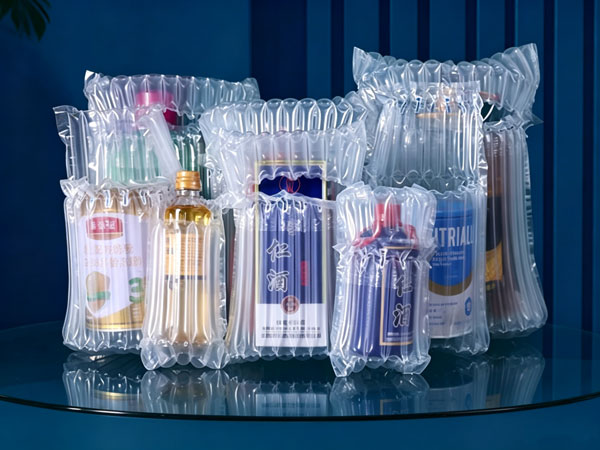
Air column bags are protective packaging materials made with interconnected inflatable air columns. The columns provide cushioning around a product, helping distribute impact and reduce direct contact with the outer carton.
Unlike general-purpose void fill, an air column bag is often designed to fit around a particular product or product category.
Advantages
- Provides cushioning around individual products
- Helps reduce movement inside the shipping carton
- Lightweight compared with many rigid protective packaging options
- Available in different sizes and configurations
- Can be customized to suit different product shapes and dimensions
Limitations
- Requires suitable sizing to achieve effective protection
- Inflation equipment or an appropriate inflation method may be needed
- Sharp objects and unsuitable handling can damage the film
- Very heavy products may require additional structural support
Best applications
- Glass bottles and beverage bottles
- Cosmetics and skincare containers
- Electronic products and accessories
- Small appliances
- Fragile consumer goods
For businesses shipping fragile products, inflatable air column bags can offer a practical alternative to conventional protective packaging. They are especially useful when individual products need cushioning rather than simply filling the empty space in a carton.
When sourcing air column bag packaging, buyers should consider product dimensions, column configuration, film thickness, valve design, and compatibility with their packing process.
3. Paper Void Fill
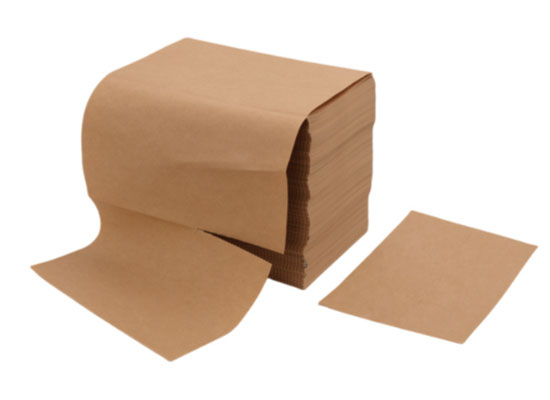
Paper void fill includes crumpled kraft paper, paper padding, and paper-based packing systems. It is widely used in shipping operations where paper materials are preferred.
Paper can be supplied in sheets, rolls, or continuous formats and formed into cushioning or gap-filling material during packing.
Advantages
- Easy to handle
- Available in multiple paper formats
- Can be suitable for recycling where local facilities accept the material
- Useful for filling irregular spaces
- Does not require inflation equipment
Limitations
- Can take up substantial storage space
- May add more weight than inflatable alternatives
- Protection varies according to paper type and packing technique
- Can lose cushioning performance if compressed excessively or exposed to moisture
Best applications
- Books and printed materials
- Non-fragile household products
- Small consumer goods
- Retail and e-commerce orders
- Businesses that prefer paper-based packaging
Paper void fill is a useful option for companies that want a straightforward, non-inflatable packaging solution. However, businesses shipping moisture-sensitive or highly fragile products should evaluate its performance carefully before using it as the primary cushioning material.
4. Bubble Wrap
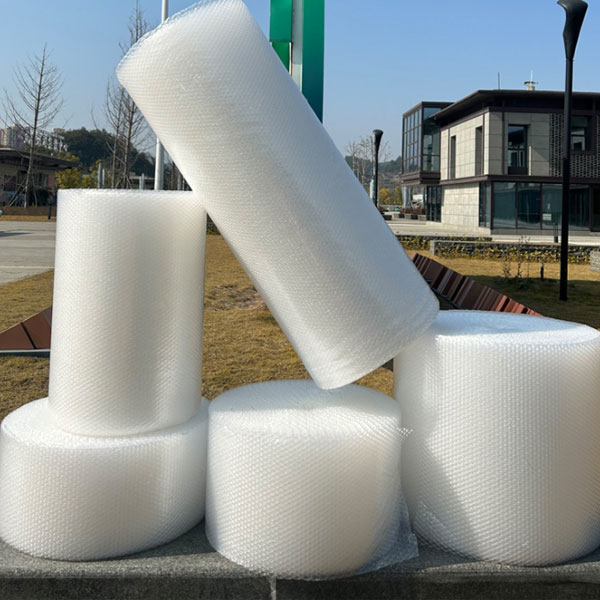
Bubble wrap is a plastic cushioning material containing air-filled bubbles. It is commonly wrapped around products to provide surface cushioning and help protect against minor impacts and abrasion.
Unlike loose void fill, bubble wrap is usually placed directly around the item or between products.
Advantages
- Provides cushioning around product surfaces
- Flexible and easy to cut
- Suitable for wrapping irregular shapes
- Can help protect against scratches and minor impacts
- Widely used in packing and fulfillment operations
Limitations
- Requires wrapping time and handling
- Can occupy considerable storage space in roll form
- May require additional materials to fill larger carton gaps
- Standard bubble wrap may not be sufficient for heavy or highly fragile products without a suitable packaging design
Best applications
- Glassware and household items
- Decorative products
- Small electronics
- Products with scratch-sensitive surfaces
- Items requiring an additional protective layer
Bubble wrap and void fill serve related but different purposes. Bubble wrap is often used to wrap the product itself, while air pillows are generally used to fill the remaining empty space in a carton.
For fragile shipments, these materials can sometimes be used together as part of a complete packaging system.
5. Foam Packaging
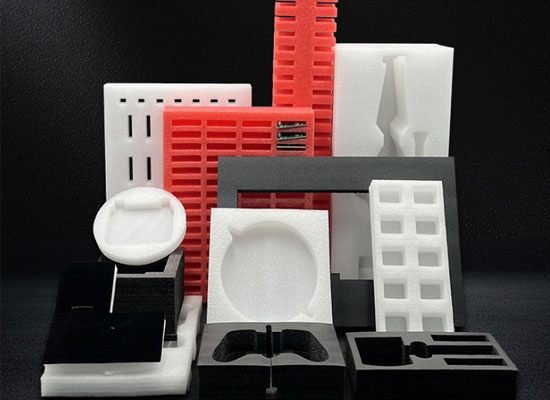
Foam packaging includes foam sheets, foam inserts, molded foam components, and other cushioning structures. It can provide cushioning and separation for products that require more controlled positioning inside a carton.
Some foam solutions are designed for a particular product, while others are supplied as flexible sheets or general-purpose protective materials.
Advantages
- Can provide targeted cushioning
- Available in different densities and thicknesses
- Suitable for custom-shaped protective inserts
- Can help separate multiple components within a package
- Useful for products requiring a more structured packaging design
Limitations
- Custom foam inserts may involve tooling or design costs
- Some foam materials require more storage space
- Material recycling and disposal options vary
- Selecting the wrong foam density or thickness can reduce protection effectiveness
Best applications
- Electronics and precision equipment
- Industrial components
- Instruments and specialized products
- Fragile products requiring a fitted insert
- Products that need repeatable positioning inside packaging
Foam packaging may be a good choice when a product requires precise positioning or specialized cushioning. For businesses shipping many product sizes, however, a fitted foam insert may be less flexible than a general-purpose void fill solution.
Void Fill Comparison Table
The following table summarizes the differences between five common shipping cushioning materials.
| Packaging material | Main purpose | Storage before use | Best suited for | Key consideration |
|---|---|---|---|---|
| Air pillows and air cushion film | Fill empty spaces | Very compact when uninflated | Lightweight products and carton gaps | Requires suitable inflation and sealing |
| Inflatable air column bags | Cushion individual products | Compact when uninflated | Bottles, cosmetics, electronics | Requires appropriate product sizing |
| Paper void fill | Fill gaps and provide general cushioning | Can require more space | General e-commerce shipments | Performance depends on packing technique |
| Bubble wrap | Wrap and cushion product surfaces | Requires roll storage | Scratch-sensitive and fragile items | May need additional carton void fill |
| Foam packaging | Provide structured or targeted cushioning | Depends on foam format | Precision equipment and fragile products | Custom designs can increase costs |
Important: These materials are not always interchangeable. The correct choice depends on product weight, fragility, dimensions, carton design, shipping conditions, and the expected level of protection.
How to Choose the Best Void Fill for Your Products
If you are comparing void fill materials for shipping, consider the following factors before making a purchasing decision.
1. Product Weight and Fragility
Lightweight products may only need basic gap filling, while heavy or fragile items may require more substantial cushioning and structural support.
For glass bottles or delicate electronic products, consider a packaging solution designed to protect the item itself rather than relying only on loose material around it.
2. The Amount of Empty Space
Large carton gaps may be efficiently filled with air pillows or paper void fill. Products that fit loosely inside a carton may need additional wrapping or a more tailored protective structure.
3. Product Shape and Dimensions
Regularly shaped products are often easier to package with standard materials. Irregular or fragile products may benefit from custom-sized air column bags, shaped inserts, or a combination of cushioning materials.
4. Packing Speed and Storage Space
High-volume fulfillment operations should consider how quickly packaging can be prepared and applied.
Uninflated air cushion film and air column packaging can help reduce the storage space needed for unused materials. However, buyers should also consider inflation equipment, consumables, labor, and maintenance.
5. Shipping Distance and Handling Conditions
International shipments can pass through multiple handling stages and experience vibration, stacking pressure, and impacts.
Packaging should be evaluated as a complete system, including the inner cushioning, shipping carton, product weight, and distribution environment. Testing is recommended for fragile or high-value goods.
6. Budget and Total Packaging Cost
The lowest material price does not always produce the lowest overall packaging cost.
When comparing solutions, consider:
- Material cost per packed product
- Packing labor and processing time
- Storage and transportation of packaging supplies
- Product damage and replacement costs
- Inflation equipment and operating expenses
- Packaging waste and disposal requirements
Evaluating these factors can help businesses identify a solution that balances protection, efficiency, and cost.
Air Pillows vs. Air Column Bags: Which Is Better?
Air pillows and air column bags are both inflatable protective packaging materials, but they are designed for different packaging needs.
Air pillows are generally used to fill empty spaces around products. Air column bags are designed to surround and cushion individual items.
Choose air pillows when your main objective is to fill gaps in a shipping carton quickly. Consider air column bags when a product needs more targeted protection, such as a glass bottle, cosmetic container, or electronic device.
For some shipments, using both materials can provide a more complete solution: an air column bag protects the product, while air pillows fill any remaining space inside the outer carton.
The right combination depends on the product and should be tested under realistic shipping conditions.
Frequently Asked Questions About Void Fill
1. What is the best void fill for shipping boxes?
The best void fill depends on the product and the amount of empty space inside the box. Air pillows are often suitable for lightweight products and general gap filling, while paper, bubble wrap, foam, and air column bags serve different cushioning requirements.
2. What is the difference between void fill and cushioning?
Void fill primarily prevents products from moving within a carton by filling empty spaces. Cushioning helps absorb or distribute impact and reduce damage. Some packaging materials perform both functions, but the level of protection varies by material and application.
3. Are air pillows better than packing peanuts?
Air pillows can be convenient for filling carton gaps and may require less storage space before inflation. Packing peanuts can fill irregular spaces, but their handling, material composition, and disposal options vary. The better choice depends on the product, packing process, cost, and local waste management options.
4. Are air column bags suitable for fragile products?
Yes. Air column bags can provide cushioning around fragile products such as glass bottles, cosmetics, and electronics. Protection depends on correct sizing, material quality, inflation, sealing, and the overall carton design.
5. Can void fill reduce shipping damage?
Properly selected void fill can help reduce product movement and some forms of impact damage. However, no material guarantees damage-free delivery. Packaging should be matched to the product and tested for the expected shipping conditions.
6. Which void fill material saves the most storage space?
Uninflated inflatable packaging materials, including air cushion film and air column bags, can be stored compactly before use. The actual space savings depend on the material format, order volume, inflation equipment, and warehouse setup.
7. Can void fill materials be customized?
Many protective packaging solutions can be selected or customized according to product dimensions, shape, protection requirements, and packing methods. Available options depend on the material and supplier. Buyers should confirm specifications, minimum order quantities, samples, and lead times before placing an order.
Find the Right Protective Packaging Solution for Your Business
Choosing the right void fill is an important part of building an effective shipping and protective packaging system. Air pillows, inflatable air column bags, paper void fill, bubble wrap, and foam packaging each have different advantages.
For businesses shipping fragile products, inflatable protective packaging can be worth considering because it combines lightweight cushioning with compact storage before inflation.
Green GaoShu supports B2B buyers looking for protective packaging materials, including air column bags, air column wrap rolls, air pillow cushion film, and other packaging solutions. Product selection can be discussed according to your product dimensions, packaging requirements, and target market.
Looking for suitable void fill or inflatable packaging for your products?
Contact Green GaoShu to discuss your packaging requirements and explore suitable options for your business.