
Air Column Bags vs. Bubble Wrap: Which Saves More Shipping Costs?
When shipping fragile goods like wine bottles, electronics, ceramics, or glass jars, choosing the right protective packaging is crucial. Damage during transit leads to costly returns, negative reviews, and lost revenue.
For decades, traditional bubble wrap for packaging has been the go-to solution for void fill and cushioning. However, air column bags (inflatable air packaging) have rapidly gained popularity among e-commerce sellers, manufacturers, and logistics companies.
So, which packaging material is better for your business? In this comprehensive comparison, we break down air column bags vs. bubble wrap across protection, storage space, labor efficiency, and overall shipping costs.
💡 Quick Summary: Air Column Bags vs. Bubble Wrap
While bubble wrap is inexpensive per roll, air column bags save significantly more money overall. Air column bags ship 100% flat (saving up to 85% of warehouse storage), require less packaging time, and provide 360-degree high-impact protection with multi-chamber design. For high-value or fragile products, air column bags offer the lowest total landed cost.
What Is an Air Column Bag?
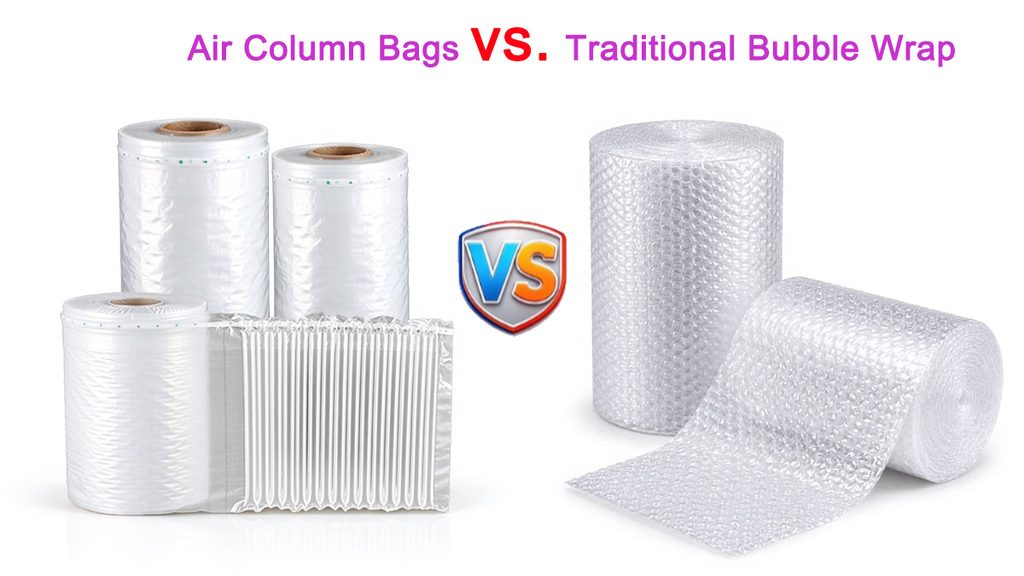
An air column bag is an inflatable protective packaging sleeve made from co-extruded PE/PA (polyethylene and polyamide) multi-layer film. It consists of multiple independent air columns.
- One-Way Air Valve System: Air is locked into each column individually.
- Redundant Protection: If one air column gets punctured, the remaining columns stay fully inflated, keeping your product safe.
- Shipped Flat: They arrive uninflated in compact stacks, taking up minimal space until you need them.
What Is Traditional Bubble Wrap?
Bubble Wrap is a pliable transparent plastic material commonly used for packing fragile items. Regularly spaced, protruding air-filled hemispheres (bubbles) provide cushioning. It is usually sold in large, bulky rolls and requires manual cutting, wrapping, and taping around products.
Air Column Bags vs. Bubble Wrap: Head-to-Head Comparison
| Comparison Feature | Air Column Bags | Traditional Bubble Wrap |
| Protection Level | ⭐️⭐️⭐️⭐️⭐️ (High impact & shockproof) | ⭐️⭐️⭐️ (Moderate; bubbles burst under heavy weight) |
| Warehouse Storage Space | ⭐️⭐️⭐️⭐️⭐️ (Arrives flat; saves ~85% space) | ⭐️⭐️ (Bulky rolls take up massive floor space) |
| Packing Speed & Efficiency | ⭐️⭐️⭐️⭐️⭐️ (Insert product & inflate in 3 seconds) | ⭐️⭐️ (Requires wrapping multi-layers & taping) |
| Volumetric / Freight Weight | ⭐️⭐️⭐️⭐️⭐️ (99% air after inflation, ultra-light) | ⭐️⭐️⭐️⭐️ (Lightweight, but creates bulkier boxes) |
| Puncture Resistance | ⭐️⭐️⭐️⭐️⭐️ (Multi-layer PE/PA film; independent air columns) | ⭐️⭐️ (Thin PE film; easily pops under pressure) |
| Unboxing Experience | Professional, clean, and premium presentation | Cluttered, messy, and hard to unpack |
Key Differences: How Air Column Bags Outperform Bubble Wrap
1. Superior Protection & Lower Product Damage Rates
Bubble wrap relies on small, low-pressure air bubbles that easily pop when subjected to high impact or heavy static pressure.
In contrast, air column bags utilize high-pressure independent air tubes. Made with durable 7-layer or 9-layer PE/PA co-extruded film, air column packaging can withstand pressure over 60–100 kg without bursting. Even if a sharp object pierces one column, the surrounding columns remain intact to protect the product.
2. Massive Warehouse Space Savings
Storing bulky rolls of bubble wrap is a hidden operational cost. A single pallet of uninflated air column bags can replace 10 to 15 large rolls of bubble wrap.
- Air Column Bags: Shipped 100% flat. You inflate only what you need, when you need it.
- Bubble Wrap: Pre-inflated rolls consume huge areas of your warehouse floor or shelving space.
3. Faster Packing Speed and Reduced Labor Costs
Time is money in fulfillment centers. Wrapping a single glass bottle in bubble wrap requires multiple wraps, cutting with scissors, and securing with tape.
With an air column bag:
- Slide the product into the bag.
- Inflate via the air inlet using a simple air pump or automated air compressor (takes 3–5 seconds).
- Place directly into the shipping box. No tape or extra void fill needed!
4. Reduced Dimensional Weight (Dim Weight) Shipping Fees
Logistics carriers like FedEx, UPS, and DHL charge based on Dimensional Weight (box volume) rather than physical weight alone. Because air column bags form a snug, custom-fit sleeve around the item, you can use smaller outer shipping boxes, significantly cutting down dimensional shipping costs.
When Should You Use Which?
Choose Air Column Bags If:
- You ship fragile, high-value, or heavy goods (e.g., wine/liquor bottles, laptops, tablets, smartphones, milk powder cans, cosmetics, glass containers).
- Warehouse storage space is limited or expensive.
- You want to lower labor time per packed order.
- You want to provide a sleek, professional unboxing experience for customers.
Choose Bubble Wrap If:
- You pack highly irregular, non-fragile items that just need surface scratch protection.
- Your daily shipping volume is extremely low and custom packaging sizing isn’t practical.
Conclusion: The Smarter Packaging Investment
While bubble wrap might seem cheaper on a per-roll basis, its hidden costs—high storage demands, slow packing speeds, larger shipping boxes, and product damage claims—make it far more expensive in the long run.
Switching to air column packaging lowers your total landed logistics cost while boosting customer satisfaction.
Need Custom Air Column Packaging for Your Products?
At Green GaoShu, we manufacture custom-engineered air column bags, wine sleeves, laptop packaging, and air column rolls tailored to your exact dimensions and branding requirements.
👉 [Contact Green GaoShu Today for a Free Quote & Sample Kit]